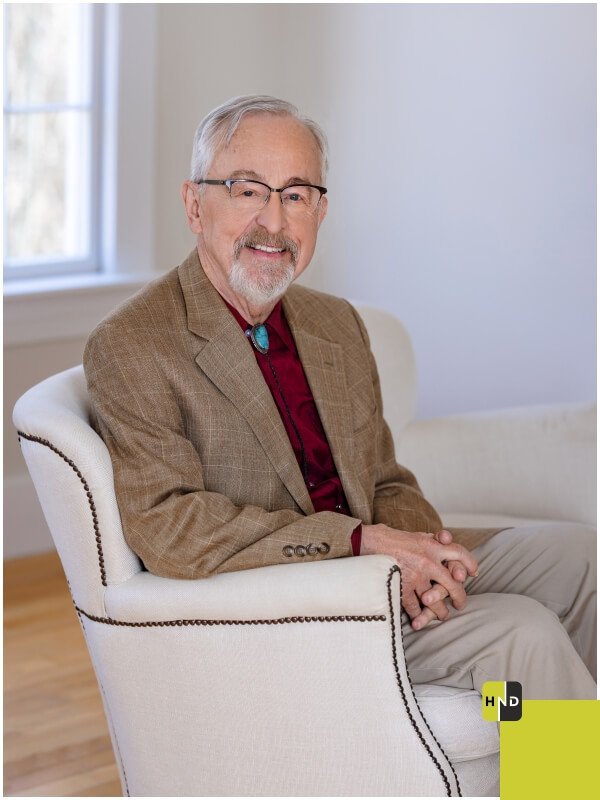
Richard C. Larson’s career in academia and research is a remarkable odyssey of curiosity, mentorship, and intellectual rigor. From his earliest days in public school, where science and math delighted rather than burdened him, to his retirement years filled with relentless learning, Larson has epitomized the lifelong learner. This document presents his reflections, weaving through his formative inspirations, classroom philosophies, collaborations, personal trials, and professional milestones.
Known for making queueing theory poetic and transforming mundane processes into elegant systems of thought, Larson, an MIT professor and member of the National Academy of Engineering, offers not only a narrative of achievement but a mindset of thoughtful inquiry. Through his eyes, education becomes a voyage, and operations research emerges as the physics of everyday life.
Sparked by Passion, Fueled by Curiosity
Richard Larson’s academic voyage began in the public schools of Needham, Massachusetts, where his natural affinity for math and science made learning feel like a joy rather than a task. Even in his first grade, he viewed studying these subjects not as a burden but as a delight. Inspired by Albert Einstein’s philosophy that a day without learning is a day wasted, Larson carried this ethos into adulthood. He continues to learn daily, even in retirement, driven by a lifelong curiosity.
His acceptance into MIT was a pivotal moment. Feeling the classic impostor syndrome—what he calls the “Groucho Marx Syndrome”—he questioned whether he belonged at such a prestigious institution. This feeling, he later learned, was common among many MIT freshmen. Nonetheless, it marked the beginning of a storied academic journey culminating in a Ph.D. in Electrical Engineering and Operations Research.
Guided by Joy in Student Success
During his active years of teaching and research, Larson approached each class with a singular goal: to ignite understanding in his students. Nothing gave him more satisfaction than seeing a concept click in a student’s mind—the light in their eyes and the satisfaction on their faces served as validation of his methods. That moment of comprehension, especially for challenging concepts, made him feel fulfilled and accomplished.
Now retired, he remains intellectually active, reflecting often on those joyful moments of pedagogical success. For Larson, education wasn’t merely about delivering lectures—it was about forming connections and making complex ideas accessible. Each successful lesson felt like a well-orchestrated symphony, and his students were not just recipients but collaborators in learning.
Collaboration Anchored in Conversation
Collaboration was at the heart of Larson’s academic practice. While his primary team often consisted of students, he regularly partnered with fellow faculty members such as Professor Arnold Barnett and Professor Amedeo Odoni. Weekly meetings with student representatives helped him stay attuned to the classroom pulse, while regular coordination with co-teachers ensured academic alignment.
This approach fostered a culture of mentorship and innovation. Larson believed that successful collaboration was less about rigid structures and more about consistent, open dialogue. By creating safe spaces for feedback and discussion, he empowered his students and colleagues alike to contribute meaningfully.
Timeless Tools in a Rapid World
In an era where data evolves at lightning speed, Larson chose to anchor his teaching in timeless methodologies. A self-described old-fashioned educator, he discouraged reliance on computers or AI for solving problems. Instead, he encouraged students to use pencil and paper, focusing on the mechanical act of writing to internalize concepts.
Larson was wary of students seeking quick answers via Google or ChatGPT. For him, the process of discovery mattered more than the result. He emphasized that “the answer is not the answer—the process is the answer,” a belief supported by modern cognitive science, which confirms that handwriting enhances comprehension and memory retention.
Discovering Beauty in Everyday Operations
Larson’s fascination with Operations Research (OR) began serendipitously. Although he initially pursued Electrical Engineering at MIT like his father before him, he found the field no longer intellectually fulfilling. It was Professor Alvin W. Drake, then Associate Director of MIT’s Operations Research Centre, who introduced him to OR.
Larson quickly fell in love with the field. To him, OR was the “physics of everyday life,” offering a framework to understand systems from traffic patterns to airline operations. His enduring affection for queueing theory—a discipline born from the work of A.K. Erlang in 1919—was emblematic of this view. Even the aesthetics of the word “queueing,” with its five consecutive vowels, captivated him.
Balancing Academia and Family Life
Throughout his career, Larson carefully balanced his professional obligations with his role as a family man. After intense days at MIT filled with teaching, research, and mentoring, he would come home, remove his metaphorical “MIT Hat,” and don his “Family Hat.” Greeting his wife and soulmate, M. Elizabeth (Liz) Murray, and hugging their three children—Erik, Evan, and Ingrid—were his rituals of recharging.
Even in retirement, his family remains a pillar of his life. Though Liz passed away in 2022 and their children are now scattered across Texas and Seattle, Larson cherishes his role as a grandfather to four grandchildren. Family, for him, has always been the grounding force that enriched and contextualized his professional life.
Lessons From Embarrassment and Resolve
Larson’s most formative intellectual challenge came during his graduate student days. As a teaching assistant, he confidently presented a correct equation to a class of undergraduates. But when a student asked for an intuitive explanation, Larson was stumped. The moment was humiliating, and he remembers it with vivid clarity.
Rather than letting it define him negatively, Larson used the experience as a turning point. He vowed never to teach a concept without possessing a deep, intuitive understanding of it himself. This commitment shaped his teaching philosophy and helped him become a more empathetic and effective educator.
Milestones That Defined the Journey
Among Larson’s many accolades, receiving the Lanchester Prize for his book Urban Police Patrol Analysis stands out. Awarded by the Operations Research Society of America in 1972, the recognition validated his pioneering work in applying OR to urban policing. This led to his appointment to the President’s Commission on Law Enforcement, where he was the youngest member of the Science and Technology Task Force.
Another landmark came in 1993 when he was elected to the National Academy of Engineering. These milestones weren’t just personal achievements—they were affirmations of the paths he had chosen and the risks he had taken in his career.
Lighting the Torch for New Minds
If Richard Larson could offer one piece of advice to aspiring professionals in operations research, it would be this: deeply reflect on what excites you within the field. Identify areas that are both intellectually stimulating and socially significant—topics that will hold your interest and challenge you over the long term.
He encourages young minds to commit fully once they find their passion. Success in OR, as in life, is not about following trends but about forging meaningful, lasting connections with real-world problems.
Future Frontiers in OR and AI
Though retired and no longer pursuing original research, Larson remains intellectually engaged with the evolving landscape of operations research. He sees immense potential in the convergence of OR and Artificial Intelligence. While 1 + 1 = 2 in arithmetic, he whimsically posits that OR + AI could equal 5—a synergy with transformative implications.
He believes that integrating the analytical rigor of OR with the adaptive learning capabilities of AI could unlock innovative solutions to complex, global problems. Though he may not be exploring these frontiers himself, his curiosity about them remains undiminished.
A Life of Insight and Impact
Richard Larson’s journey offers a rich tapestry of insight, dedication, and transformative learning. His reflections remind us that education is not a static path but an evolving journey filled with both challenges and triumphs. Through every phase—student, teacher, researcher, mentor, and now retiree—Larson has upheld the ideals of integrity, curiosity, and service.
His legacy is not just in the theories he advanced or the awards he received but in the countless students he inspired and the enduring wisdom he imparts. As operations research continues to evolve, Larson’s voice remains a beacon, urging future generations to think deeply, act ethically, and above all, never stop learning.
Read Also : One Vision, One Journey: The Story of Dr. Richard and Elizabeth’s Bond